

on the Philosophy of Writing
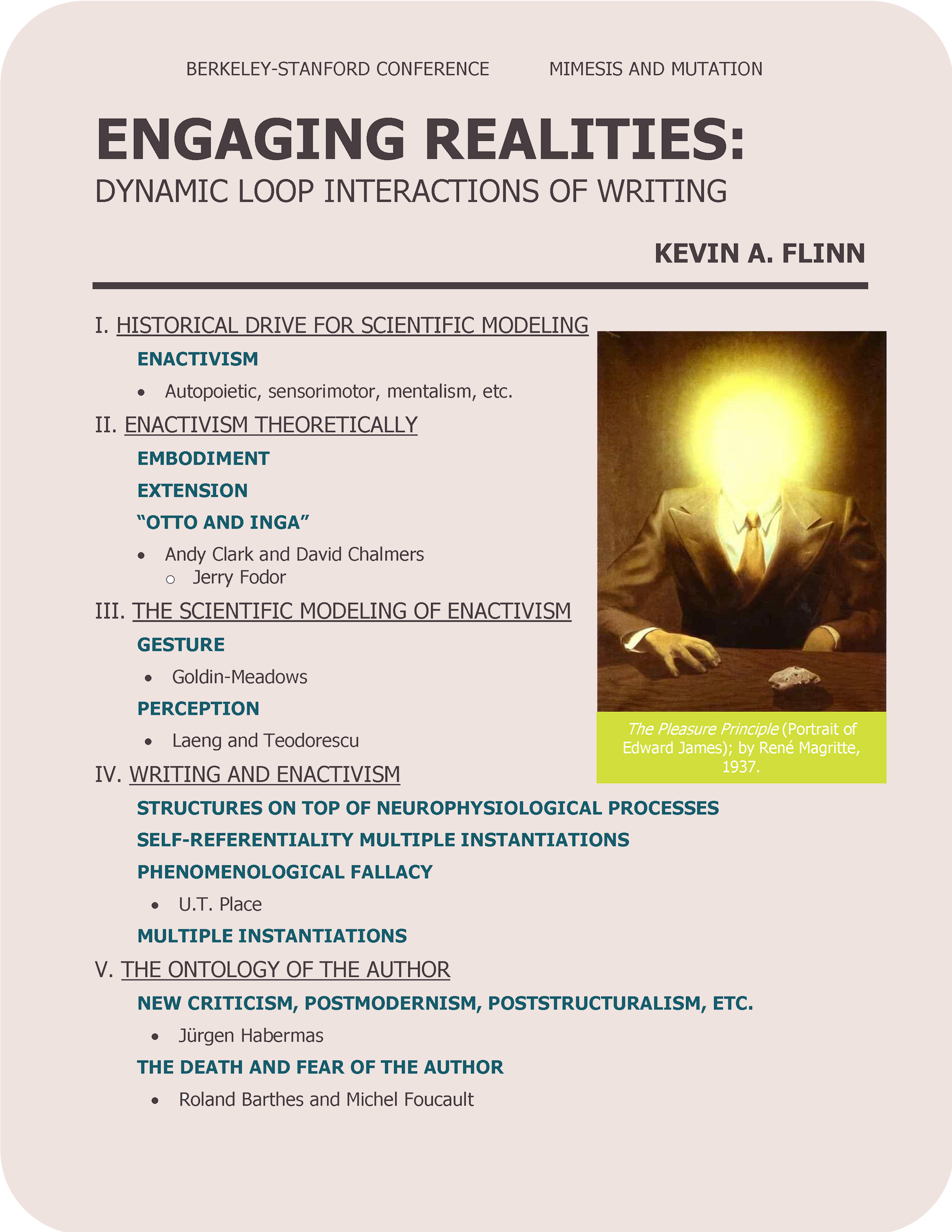
Figure 1. Conference presentation paper handout
UC Berkeley and Stanford on behalf of Louisiana Tech University
Overview
-
This conference paper critically examines Ian Ravenscroft's enactivist approach to writing, particularly his concept of "dynamic loops" that illustrate the interaction between writing, reading, and audience feedback. The analysis challenges the empirical foundations of enactivism, arguing for a more grounded understanding of the writer's physical presence in the act of writing.
-
The paper was presented at the 2018 Berkeley-Stanford Conference, focusing on themes of mimesis and mutation. It explores the intersection of literature and the philosophy of mind, specifically addressing the implications of enactivist theories on our understanding of writing processes.
-
Schools
-
![]()
University of California, Berkeley
UC BERKELEY
-
![]()
Stanford University
STANFORD
-
![]()
Louisiana Tech University
LA TECH



Theory
Enactivism and its variants (e.g., autopoietic and sensorimotor)Embodied and extended mind hypotheses

Research
Susan Goldin-Meadow's research on gesture and cognitionBruno Laeng and Dinu-Stefan Teodorescu's eye movement studies

Engaging Realities: Dynamic Loop Interactions of Writing
-
Trends of human beings as a part of the environment rather than simply within it has been on the rise since the popularization of Darwinian evolution in the late nineteenth-century and decline of Cartesian dualism throughout the twenty-first century. “Writing is not purely cerebral,” writes Ian Ravenscroft in Philosophy and Literature in 2017. Broadly speaking, enactivism theory proposes an ongoing interaction between the mind and the world. More recently, radical enactivism, which states that the mind is a literal extension of the brain, has become increasing popular within philosophy of mind. Despite Ravenscroft presenting a scientific postulate through many examples of how enactivism empirically works, his selective use of scientific research supports subject interaction with the world without demonstrating how the brain is literally extended through scientific evidence. The strength of this research body supports the idea of individual engagement with the world and his proposed feedback loops between the two. Nevertheless, Ravenscroft’s research as well as his philosophical commentary still does not explicitly demonstrate this extension in physical terms. Ravenscroft proposes two “dynamic loops” of writing: one “dynamic loop involving writing, reading, and writing again” and “a second dynamic loop involving writing, reading to an audience, receiving feedback, and writing again.” Ravenscroft’s model presents the tangibility of not only a person, but also a writer in the world. Albeit this model does not address the representation of words through the writer, it does address the physicality of writer under the text. By eliminating the flaws of the enactivist factors within his theory, a repackaged Ravenscroft writing model can demonstrate a writer’s engagement with the world, support how they interact, and contribute to both the philosophical dialogue through addressing writer function and literary dialogue by creating foundational physicality under the text.
-
In wake of the Darwinian revolution, debate began which persists to this day about what the evolutionary function of consciousness is. While it did lay to rest a substantial amount of the Cartesian dualism that ruled Western thought for centuries, an onslaught of mistaken conclusions as a response have maintained a feeble, debilitating grip on the wheel of progress. Through the mottled lens in which we view consciousness, theories since have went as far as describing the mind as part and parcel notebooks, flocks of birds, or even that there is no direct perception of the world at all. While this is absurd to conventional thinking, many so-called specialists have been carrying this type of baggage into our present era. Among the baggage is a litany of theories that are characterized by a drive to be scientific. Under the umbrella of enactivist theories of mind, there is an excess of people hinged upon doing this through unstable scientific modelling.
Ian Ravenscroft wrote that writing “is not purely cerebral; it reaches out beyond the brain to engage the world” writes Ian Ravenscroft (45). Of the two most popular theoretical approaches to enactivism, Ravenscroft approaches writing through an autopoietic enactivist theory of mind, rather than sensorimotor enactivism. While the latter is the less absurd of the two, there are far more inept enactivist approaches that go as far as committing to mentalism. There is no need to deal with these theories separately though since there are deep mistakes in all philosophical enactivist theories of mind. Ravenscroft’s aim is to demonstrate the physicality of the writer and it is in this that Ravenscroft delivers his biggest takeaway. The objective, indispensable, and foundational physicality of the writer is before and always under the text. This takeaway is not addressing authorial intent or to address what the Self is in relation to the author, but to attest to the metaphysical truth and scientific certainty of the author as an organism making physically observable imprints in the world.
-
Before elaborating on Ravenscroft’s takeaway, I’m under the imperative to thoroughly unpack his approach. Despite enactivist theorists being notorious for shifting their goalposts, many accessories as well as a few foundational pillars can be dispensed. While the variants of autopoetic as well as sensorimotor enactivist theories have been representational, antirepresentational, or often embedded, all philosophical enactivist theories of mind are embodied and extended.
Embodiment is constituted by those features of the mind beyond the brain. It states that these features can be so ingrained in the “systems” of cognition that they become an integral component of the it. Embodied cognition assumedly carries with it rich scientific evidence. The mistake here is to associate scientific research of how there are neurophysiological responses to different objects in the world as the same as or indispensable to the neurophysiological processes themselves. A neurophysiological process that is, in and of itself, only a self-referential thought, is an example that severs deep the divide of cognitive processes with given objects in the world, without dismissing that there are important and observable changes in the brain with their interactions. While features that are believed to be embodied can be understood as a tool or aid to cognition, it is not understood as part of cognition simply because these embodied objects are not part of the brain. To claim embodiment is a necessary feature of the mind is to deny this simple truth: that the cognitive processes of the mind begin and end in the brain.
Closely related to embodiment, the roots of the extended mind hypothesis derive from Andy Clark and David Chalmers. And, the extended mind is the most mistaken feature of enactivism. The extended mind claims to literally extend into the world (Clark and Chalmers “The Extended Mind”). And, it isn’t just Ravenscroft who describes external objects to the brain as literal parts of the mind. He actually borrows the term from Clark and Chalmers, who are not shy to use it repeatedly in their initial proposal, which Jerry Fodor was quick to make light of (Fodor 13). The famous thought experiment that Clark and Chalmers used when laying down the groundwork for their extended mind hypothesis is of “Otto and Inga,” which is also used by Ravenscroft in his approach. The thought experiment has a fictional Inga recall an address from her memory. Otto, on the other hand, has Alzheimer’s and uses his notebook to recall the same address. Clark, Chalmers, and Ravenscroft claim that the Otto’s notebook has the same casual or functional role as Inga’s memory. Referring again to conventional thinking, it’s hard to consider the mind is part and parcel a notebook. It really offends common sense. Nevertheless, the thought experiment offends more sophisticated approaches as well. Fodor claims that when Otto inscribes in his notebook, he is doing so intensionally, meaning that what he writes connotes properties or qualities. Fodor said “Inga doesn’t have to think about (or, in any literal sense, ‘consult’) her memories; she just has them and proceeds on her way in light of them. So there is, after all, a principled difference between what Inga’s memories have, and what Otto’s entries have” (Fodor 14). In addition, the functional processes alone look nothing alike. Inga’s has a mind-to-world direction of fit whereas Otto has a mind-to-world, then world-to-mind, and subsequently mind-to-world direction of fit. If these instances are supposed to be looked at in the same way, then we can just add an infinite number of regresses by an infinite number of notes within an infinite number of notebooks that only serve as a mind-to-notebook and notebook-to-mind ad infinitum without ever arriving at the address. No matter how many regresses are involved, they are not logically akin to Inga’s. Also, while Otto can lose his notebook and Inga can lose her memory, Otto has a choice whereas Inga might not. The sharp difference is the same physiological difference that a notebook has biologically to a neural field in the brain. They are not even the same sort of stuff.
-
Even forgiving enactivism’s dubious theoretical positions, Ravenscroft claims that enactivism is empirically-rooted rather than understood analytically (49). This distinction hints at the real weakness in the hypothesis. Also, an empirical claim that is not understood through the research alone is not truly empirical. It is simply theory-laden structure upon data and observations. Ravenscroft’s keen use of empirical data does produce realities of the world that minds can engage in, but these realities are not extended minds, but notions that are unintentional, maybe too simple, and yet, progressive in the theoretical landscape of the exiled author.
Ravenscroft models this enactivist approach toward writing by actual empirical research. His first confounding instantiation is physical action through gesturing. His gesture data is pulled from the impressive body of research that Susan Goldin-Meadows has produced over decades at the University of Chicago, which she is still doing today in the laboratory of her namesake. The illustration of gesture presented is that “blind people—including those blind from birth—gesture when they speak, even when they know their interlocutor is also blind” (Ravenscroft 46). What this, again simply but unintentionally, demonstrates is that people are entrenched in language and the various communications thereof and not that the world is literally part of the mind rather than the mind operating in the world. Thereby, Ravenscroft is guilty of fashioning Goldin-Meadows’ research with enactivism. In the purpose statement of the Goldin-Meadows laboratory, part of the goal is “to understand the joint effects that brain injury and environmental variation can have on how children use language and gesture to communicate and engage in higher order thinking” (Goldin-Meadows1). The laboratory states that environmental variation can have effects on higher order thinking. This is remarkably different from environmental variation being a literal part of higher order thinking. In fact, the word enactivism appears nowhere in Goldin-Meadows research. Hearing Gesture: How Our Hands Help Us Think is the text that Ravenscroft pulls the research from (Goldin-Meadows2). Goldin-Meadow stated, “my book, Hearing Gesture, makes it clear that the spontaneous gestures we produce play a role in how we think and talk” (Goldin-Meadows3). Gestures that we produce play a role in how cognition occurs is, likewise, remarkably different than being a literal part of the cognition. If a meteor blasts through the ozone and is rapidly approaching the Earth’s surface, Otto will probably not point toward the meteor and tell Inga “Look at our thinking!” The same occurs when picking up a marble, touching the dead skin cells of a lover’s hair, or having the wind hit one’s face. Humans engage with these objects, but in the general and literal sense, they walk away from them or have these objects leave them, thus being no longer directly linked to cognition. Whereas, the metaphysical realities of cognition in the brain can’t be simply walked away from, if at all. To illustrate John Searle’s example of digestion and the mind being both understood biologically, Otto does not look at a banana and think that he is digesting the banana (Searle). Moreover, he can’t even pick up the banana and think that he is digesting the banana. Likewise, he cannot think that the banana is, in of itself, a thought owned by Otto outside his brain or even partially the metaphysical realness of a cognitive process that takes place in the brain.
Ravenscroft uses more of Goldin-Meadows’ research that demonstrates how participants have worse memory recall when not allowed to gesture. He anecdotally refers to Charles Dickens acting out his characters while writing (47). Ravenscroft fails to address conditioning as seen in Goldin-Meadows research, and more specifically, conditioning realized through neuroanatomy. While this is hyperbole, Dickens’ writing process could be easily explained as a result of reenacting real-life characters he knew or simply by engaging with himself in his given environment.
Ravenscroft’s next instantiation is perception through sight. Although sight is the easiest and most common approach to human perception, it is not holistic by any means. He uses two studies from Bruno Laeng and Dinu-Stefan Teodorescu that demonstrate better performance in tasks and recall when eyes could move rather than stayed fixed on one location (Laeng and Teodorescu 207). From this, Ravenscroft expounds this theory by claiming that the “literary imagination extensively involves visual imaginings” (53). Then, he makes the conclusion that due to this, the literary imagination is an embodied action and “is not purely brain based” (53). Here, this faction of Ravenscrofts’ argument looks like this:
1. Major Premise: Visual imaginings are embodied and not purely brain based.
2. Minor Premise: Literary imagination involves visual imaginings.
3. Conclusion: Thus, literary imagination is embodied and not purely brain based.
This syllogism has an illicit major. This syllogistic fallacy assumes that visual imaginings are taking place outside of the body. Again, the burden of the proof lies upon Ravenscroft to show how the mind and the world are not simply linked but can often be one and the same. All the referenced studies demonstrate the link but fail to give a physiological account of the mind and objects in the world being potentially of the same sort of stuff.
-
Ravenscroft proposes two types of world engaging writing processes that are understood as dynamic loops involving the brain and the world. The first loop is “a dynamic loop involving writing, reading, and writing again,” and the “second dynamic loop [involves] writing, reading to an audience, receiving feedback, and writing again” (45). Unfortunately, despite all the baggage, this is the main stasis of his theoretical approach to writing. And, like the embodiment problem of enactivism, models do not need to be built upon neurophysiological structures themselves. Ravenscroft claims that writing purely in one’s head is theoretically possible, but not realistic to how individuals actually engage in the world. Essentially, he acknowledges the weakness of the dynamic loop models by acknowledging another possibility, the self-referential possibility, and casually brushes the arguments aside. Ravenscroft argues what U.T. Place coined as the “phenomenological fallacy.” Since consciousness is a neurophysiological feature, it must be explained by brain processes. And due to the irreducibility of consciousness, there isn’t a necessity to explain the mind in the unexacting communitive structure of language (Place 48). His model is also made incoherent through multiple instantiations. While it is possible for writing as an engagement with the world to look something similar to a looping effect through flawed human modeling on top of structures of the brain, there is a litany of other possibilities too. For instance, Ravenscroft never addresses how this is broken up in time. Is it conceivable that every token instance, every instantiation of the brain is something that looks like a loop? Even if it is to be assumed that there is a looping within the mind, each engagement, such as a thought, the action of writing, erasing and correcting a mistake, listening to advice, and rewriting after listening to advice and even the multiple instantiations within these examples, etc. are all token instances that can be understood through complex and different neurophysiological processes.
-
Despite this extensive unpacking of enactivism, like most theoretical movements, it is variegated. While the vast majority of enactivist philosophers, if not all, subscribe whole-heartedly to this issues of embodiment and extension previously mentioned, there is an approach, which for simplicity’s sake, that will be referred to weak enactivism here. Weak enactivism is primarily seen in developmental education research and focuses research on how exactly individuals learn through engagement with the world. Weak enactivism does not claim that objects in the world are literally a part of the brain. It seeks to just demonstrate the complex ways in which they are linked and affect each other. And, this research has been extremely productive as can be seen in a figure such as Goldin-Meadows, despite her never claiming association with the term. And while strong enactivism has many missteps, it would be overzealous to throw the baby out with the bathwater. As there are takeaways to weak enactivist modeling in developmental education research, strong philosophical enactivism, as seen with Ravenscroft, can deliver takeaways as well. The biggest takeaway as previously mentioned, written in the simple and unintentional subtext, is the physical reality of the writer. Enactivism is a failed epistemological approach. On the other hand, the physical reality of an author is an ontological third-person objective. Under every text, on the very foundational level, there will always exist an author. Although Ravenscroft does not make this specific claim, he is a cohort in the argument. With this simple and common-sensical approach of how to engage with the reality of writers, reconsider how truly dead New Criticism is as well as reevaluate the exile or killing of the author seen within Postmodernism, Poststructuralism, among other bogged down theories. A few decades ago, Jürgen Habermas delivered the same blow to Postmodernism and Poststructuralism that embodiment has fallen victim to: self-referentiality—the irony of writer tearing down the writer. A fresh lens must be put on to look at supposed scientific approaches to texts without respecting the scientifically-based realities when approaching the text. The audience has always had free reign to kill the author and it might be fruitful in revealing a given text, but with an audience not abstracted from true reality outside the text, the only way to approach a text with a dead author is with this guise made fully bare. In response to Roland Barthes essay “The Death of the Author,” Michel Foucault in his famous lecture “What is an Author?” said that the inclination to kill the author has larger psychological merits: that we fear what the author might mean (11). Ravenscroft said it “is by engaging with the world that the writer imagines it afresh” (53). And, it is by engaging texts with the physical reality of the author underneath that the reader must attend to the text anew.
-
Barthes, Roland. “The Death of the Author.” University of Pennsylvania Center for
Programs in Contemporary Writing. <https://writing.upenn.edu/~taransky/Barthes.pdf> Accessed 19 April 2018.
Clark, Andy. Supersizing the Mind: Embodiment, Action and Cognitive Extension. Oxford University Press. 2008.
Clark, Andy and David Chalmers. “The Extended Mind.” New York University. <http://www.nyu.edu/gsas/dept/philo/courses/concepts/clark.html>. Accessed 19 April 2018.
Fodor, Jerry. “Where is my Mind?” London Review of Books. vol. 31, no. 3, 2009, pp. 13-15.
Foucault, Michel. “What is an Author?” Language, Counter-Memory, Practice: Selected Essays and Interviews. Ithaca, N.Y: Cornell University Press, 1977. Print. pp. 113-138.
Goldin-Meadows1, Susan. “Goldin-Meadow Laboratory Welcome.” <https://goldin-meadow-lab.uchicago.edu/>. Accessed 19 April 2018.
Goldin-Meadows2, Susan. Hearing Gesture: How Our Hands Help Us Think. Cambridge, Mass: Belknap Press of Harvard University Press, 2003. Print.
Goldin-Meadows3, Susan. “Research Statement.” <https://goldin-meadow-
lab.uchicago.edu/page/research-statement>. Accessed 19 April 2018.
Laeng, Bruno and Dinu-Stefan Teodorescu. “Eye Scanpaths during Visual Imagery Reenact
Those of Perception of the Same Visual Scene.” Cognitive Science, vol. 26, no. 2, 2002. pp. 207–231.
Place, U.T. “Is Consciousness a Brain Process?,” British Journal of Psychology, vol. 47, 1956. pp. 44–50.
Ravenscroft, Ian. “Engaging the World: Writing, Imagination, and Enactivism.” Philosophy and Literature, vol. 41, no. 1, Apr. 2017. pp. 45-54.
Searle, John. “Theory of Mind and Darwin’s Legacy.” Proceedings of the National Academy of Sciences of the United States of America, vol. 110, no. 2, 2013. pp. 10343–10348. PMC. Accessed 19 April 2018.
Analysis
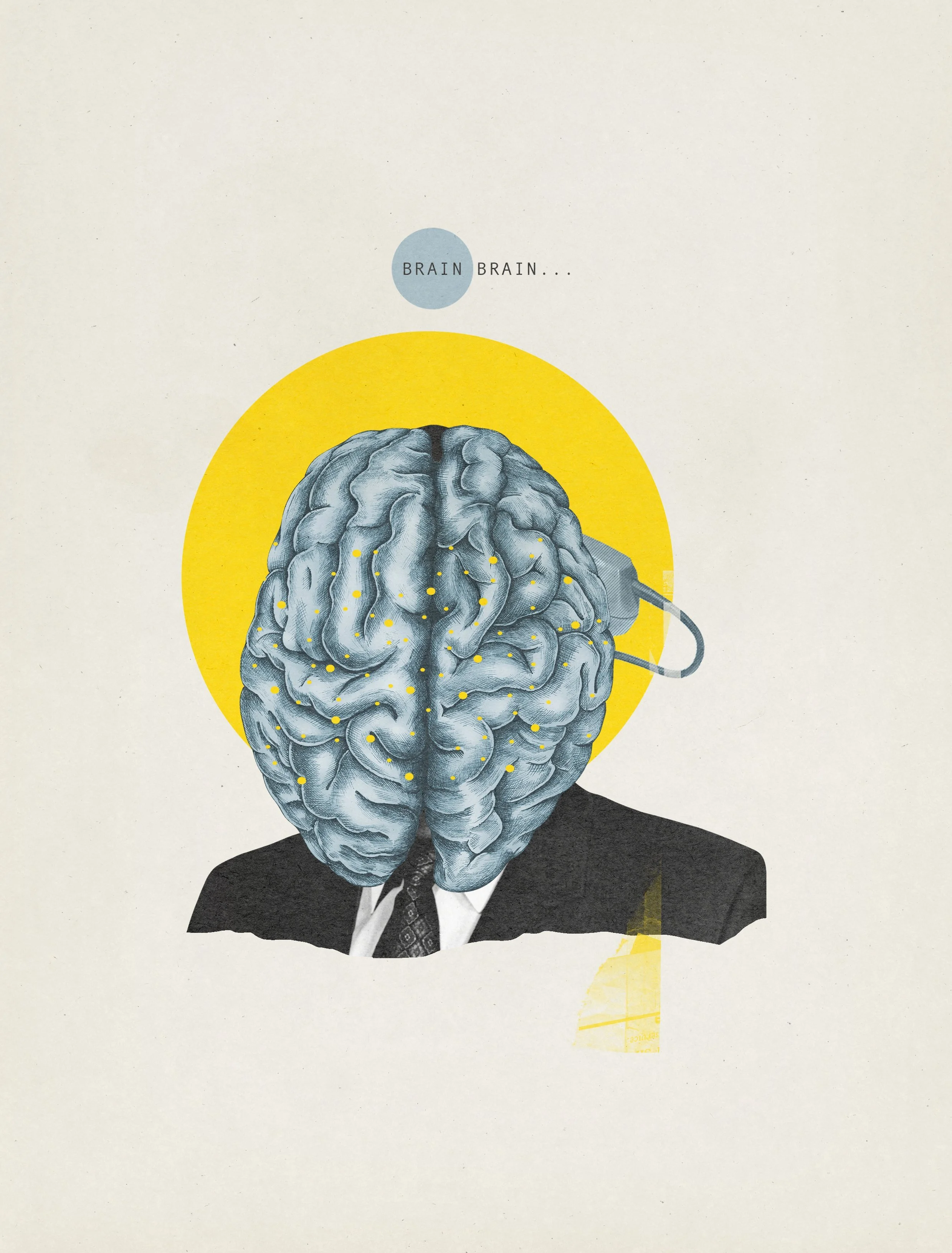
The paper argues that while gestures and eye movements are indeed linked to cognitive processes, being biological and neurologically connected to the brain, they do not extend cognition into external objects like notebooks or tools. Ravenscroft’s selective use of empirical studies, such as gesture research by Goldin-Meadow and eye movement studies by Laeng and Teodorescu, demonstrates important physical and behavioral links between the body and cognition. However, these do not support the claim that external objects themselves (like Otto’s notebook) become literal parts of the mind. The paper highlights that while these bodily movements are integral to thought, cognition itself remains a function of the brain, not an external extension.
Impact
ꗝ Academic reframing ➜
Reasserted the importance of biological and neurological connections, such as gesture and eye movement, as part of the writer’s cognitive processes while rejecting the extension of physical mind into external objects
✣ Philosophical challenge ➜
Challenged strong enactivist claims by demonstrating that biological realities (like hands and eyes) remain distinct from external tools, preserving the integrity of cognition within a biological brain
☍ Integration of Authorial Reality ➜
Advocated for a renewed understanding of the writer’s physical presence beneath the text, offering an ontological foundation that counters postmodern sentiments
✗ Model for across disciplines
Created a bridge between writing and philosophy of mind by weaving together empirical research and critical theory, fostering richer cross-disciplinary insights in academic discourse